Unveiling the Future: The Impact of AI on Creative Industries
 0
 0
In an era where technology continuously reshapes our world, artificial intelligence (AI) emerges as a significant force, particularly within the creative industries. This transformation is both exhilarating and unsettling, as AI redefines the boundaries of creativity and collaboration. The intersection of AI and creativity has sparked a fascinating debate on the future of art, music, design, and writing, challenging traditional perceptions of the creative process.
AI’s foray into the creative realm has been marked by its ability to generate art, compose music, write stories, and even design fashion. Tools like DALL-E and GPT-3 have demonstrated that AI can not only mimic human creativity but also produce original works that are engaging and thought-provoking. These advancements have opened new horizons for artists and creators, offering unprecedented tools to explore and express their creativity. For instance, AI algorithms can analyze vast datasets of paintings to generate art in the style of any era or create music that blends different cultural genres in innovative ways.
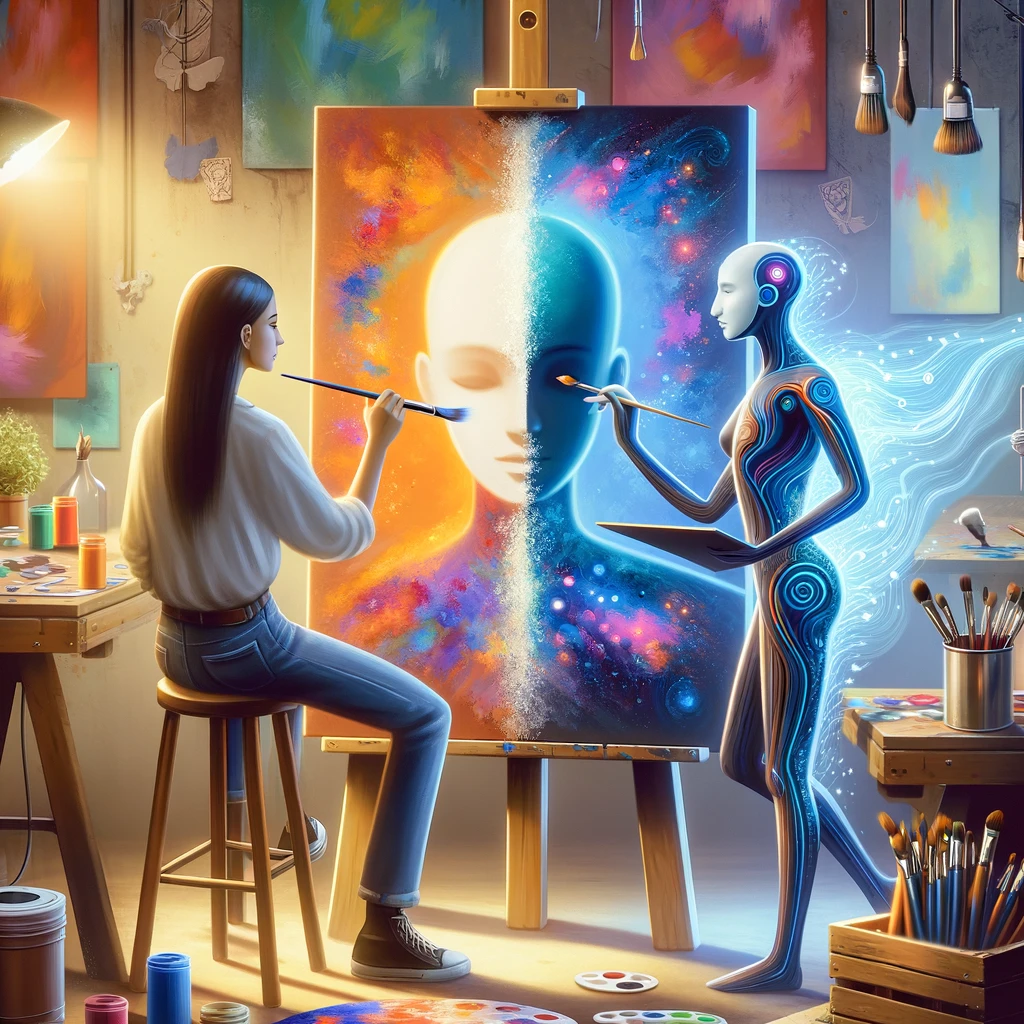
However, the rise of AI in creative industries also raises critical questions about originality, authenticity, and the value of human creativity. Some fear that AI could overshadow human artists or reduce the demand for human-created art. Yet, rather than viewing AI as a competitor, many in the creative fields see it as a collaborator that enhances their work. AI can take on repetitive tasks, analyze trends to provide insights, or offer new perspectives that enrich the creative process. This collaboration between human intuition and AI’s computational power is paving the way for a new era of hybrid creativity.
Moreover, AI democratizes the creative process by making it more accessible to individuals without formal training in art or music. People can now use AI-powered tools to realize their creative visions, breaking down barriers that once limited creative expression to professionally trained artists. This democratization fosters a more inclusive creative community, enriching the cultural landscape with diverse voices and perspectives.
The economic implications of AI in creative industries are profound. AI can streamline production processes, reduce costs, and create new markets for digital art and entertainment. However, it also necessitates a reevaluation of copyright laws and ethical guidelines to protect the rights of creators and ensure fair compensation in an AI-augmented landscape.
As we stand on the brink of this new frontier, it’s clear that AI will not replace human creativity but rather redefine it. The future of creative industries lies in a symbiotic relationship between human and artificial intelligence, where each complements the other’s strengths. This partnership promises to expand the boundaries of what is creatively possible, opening doors to uncharted territories of expression and innovation.
In conclusion, the impact of AI on creative industries is a multifaceted phenomenon that encompasses challenges and opportunities. By embracing AI as a tool for collaboration, we can unlock new dimensions of creativity and pave the way for a future where technology and human ingenuity coalesce to create art that resonates with the essence of our shared humanity. As we navigate this evolving landscape, the creative spirit’s resilience and adaptability will continue to thrive, augmented by the boundless possibilities that AI brings to the canvas of our imagination.