The Ethics of Genetic Editing: Navigating the Complexities of CRISPR Technology
 0
 0
In the realm of modern science, few areas promise more transformative potential than genetic editing. At the forefront of this revolution stands CRISPR technology, a groundbreaking method that allows scientists to edit parts of the genome with unprecedented precision, efficiency, and flexibility. This advancement has opened doors to previously unimaginable possibilities in medicine, agriculture, and beyond. However, as we stand on the brink of a new genetic frontier, the ethical implications of CRISPR and genetic editing are subjects of intense debate.
The allure of genetic editing is undeniable. Imagine a world where genetic diseases like cystic fibrosis, sickle cell anemia, and even some forms of cancer are things of the past. CRISPR technology could make this a reality by correcting genetic defects at their source. Beyond healthcare, it offers solutions to global challenges such as food security, by creating crops that are more nutritious, resilient to climate change, and yield more produce. Yet, as we navigate these possibilities, we are also forced to confront profound ethical questions about the nature of such interventions.
One of the most contentious issues is the potential for genetic editing to be used for non-therapeutic enhancements, such as altering physical appearance, intelligence, or athletic ability. This opens a Pandora’s box of social and moral dilemmas, including concerns about equity, consent, and the very essence of human nature. The specter of “designer babies” raises fears of widening social divides, where the wealthy could afford genetic enhancements, potentially leading to a new form of inequality based on genetic attributes.
Moreover, the long-term ecological and evolutionary impacts of altering the genome of organisms are largely unknown. While the benefits of genetically modified crops are clear, the potential for unintended consequences on ecosystems and biodiversity cannot be overlooked. The possibility of gene drives, which could theoretically wipe out entire species or alter them irreversibly, underscores the need for caution and rigorous oversight.
The ethical landscape of genetic editing is further complicated by the global disparity in regulatory frameworks. While some countries have strict regulations governing the use of CRISPR technology, others have more lenient or ambiguous policies. This inconsistency poses a risk of “genetic tourism,” where individuals might travel to countries with less stringent regulations to access genetic editing technologies, potentially circumventing ethical and safety standards.
In addressing these ethical challenges, a nuanced approach is essential. It involves balancing the immense potential benefits of genetic editing against the moral, social, and ecological risks it entails. This requires an ongoing dialogue among scientists, ethicists, policymakers, and the public to establish guidelines and regulations that ensure the responsible use of genetic editing technologies. Such discussions must be inclusive, considering diverse perspectives to navigate the complex moral terrain that accompanies the power to edit life itself.
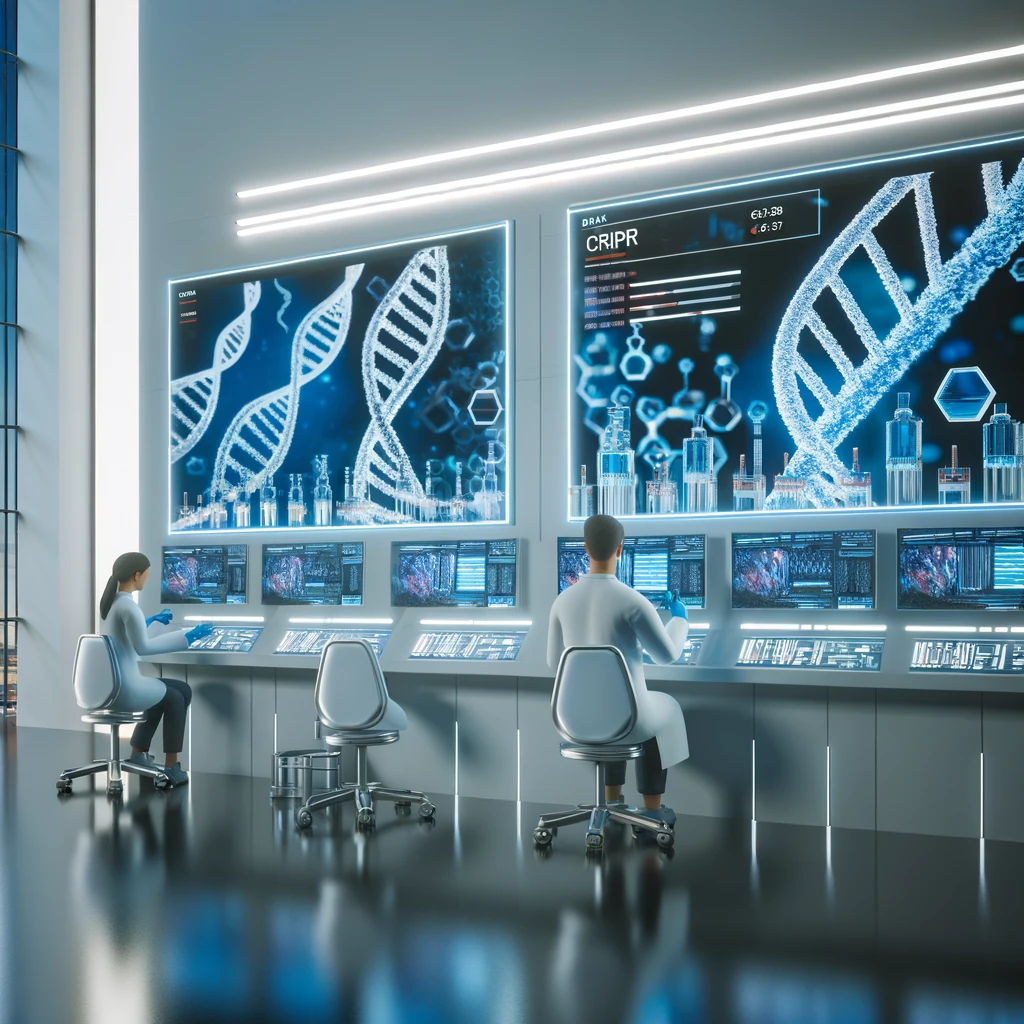
As we forge ahead into this new frontier, the image of a futuristic laboratory, where scientists meticulously edit genes, serves as a powerful symbol of both hope and caution. It embodies the promise of CRISPR technology to address some of humanity’s most pressing challenges, while also reminding us of the weighty ethical considerations that accompany this power. The path forward is fraught with complexity, but with careful deliberation and responsible stewardship, we can navigate the ethical maze of genetic editing to harness its full potential for the greater good.